Where This Starts
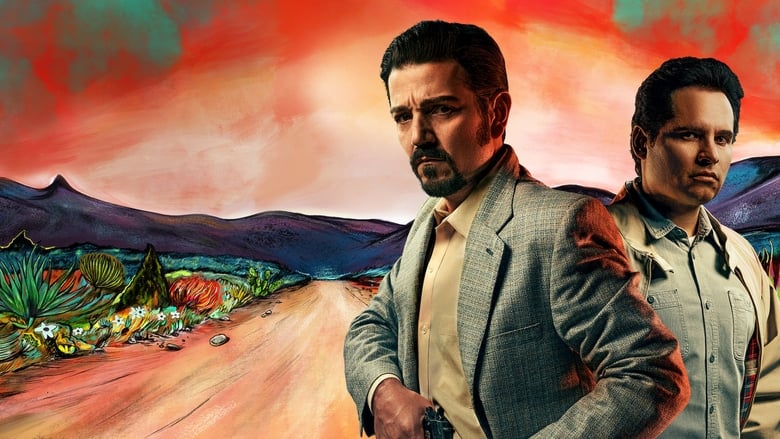
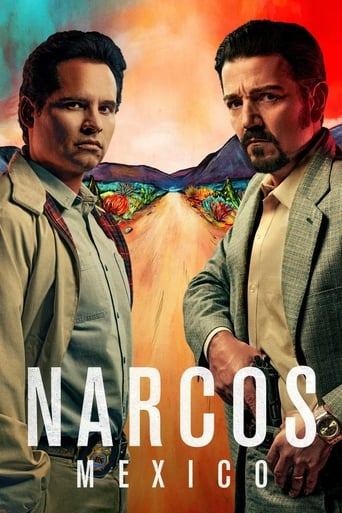
A prequel-spinoff to Netflix's Narcos, created by Chris Brancato, Carlo Bernard, and Doug Miro, that jumps north from Colombia to 1980s Guadalajara. Diego Luna plays Miguel Ángel Félix Gallardo, a former cop with a plan to unify Mexico's scattered weed growers into one organization. Michael Peña plays Kiki Camarena, a DEA agent who transfers to Guadalajara with his wife and kid and starts pulling on threads nobody wants pulled. Scoot McNairy narrates in that same wry, morally exhausted lawman voice the franchise runs on. The first stretch of season one is pure setup: Félix pitching a business plan to men who don't want a plan, Camarena realizing his new field office is asleep.
What Works
Diego Luna is the reason this exists. He plays Félix as quiet, watchful, allergic to raising his voice, which makes every room he walks into feel like it's holding its breath. Peña plays Camarena with real warmth and a stubborn streak that reads as a character trait, not a plot device. The show also spends actual money on the 80s: cars, radios, DEA field offices with wood paneling, cartel compounds that look like real houses instead of cartel-house sets. Season 2 tightens everything up. Alejandro Edda shows up as a young Joaquín "El Chapo" Guzmán and steals scenes without doing much. Scoot McNairy's Season 3 lead performance as DEA agent Walt Breslin is dry, mean, and funny in a way the show earns by then. And the writing treats Mexican politics, DFS involvement, and cross-border corruption as the actual story rather than backdrop for gringo heroics.
What It Gets Wrong
It's long. Three seasons, 30 episodes, and the pacing sags in the back half of season 1 when the show gets in love with its own procedural setup. If you've done Narcos proper, some franchise beats repeat: the omniscient narrator, the freeze-frame photo of the real guy, the montage over a Latin rock needle-drop. Season 3 pivots to a new lead cast and some viewers never re-onboard. And the show has the usual prestige-cartel problem where it wants to indict the business while also shooting it like a music video.
The Right Viewer
If Sicario, The Wire's Barksdale seasons, or Ozark worked for you, this lands. If you liked Narcos but wished it slowed down on institutional rot instead of speeding through it, season 1 is built for you. People who bounce: anyone who needs a clean hero, anyone who wants subtitles off (a lot of this is in Spanish and it should be), and anyone who checked out of prestige crime TV around the fourth Sons of Anarchy season. If the phrase "70-minute episode about a wiretap" makes you tired, skip.
The Verdict
Worth It, and season 2 is the reason. Luna's performance is a genuine piece of TV acting, the kind that quietly reorganizes what you think the show is about. The scripts don't sermonize; they let the corruption of the DFS, the CIA sideshow, and the internal cartel politics play as plot mechanics with consequences, not as thesis statements shouted at the audience. Craft-wise, the direction is patient, the sound design in raid sequences is genuinely great, and the show trusts you to keep up with a lot of names. It's not The Wire and it's not trying to be. It's a well-mounted, well-cast, occasionally over-long crime saga that earns its runtime more often than it wastes it. Passable-plus with real peaks. That's what Worth It means.