Where This Starts
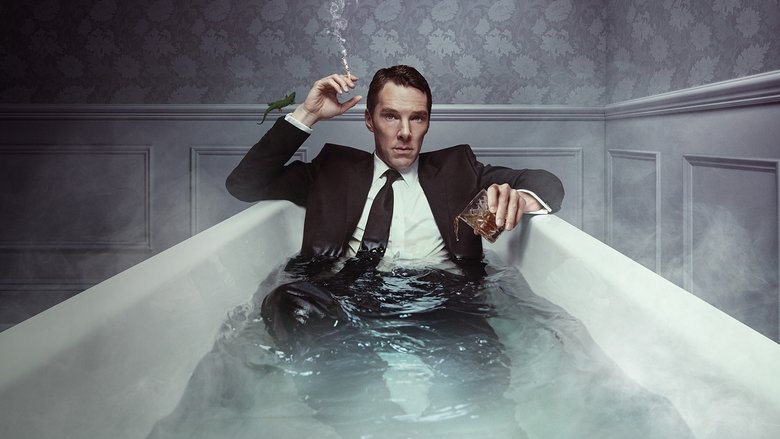
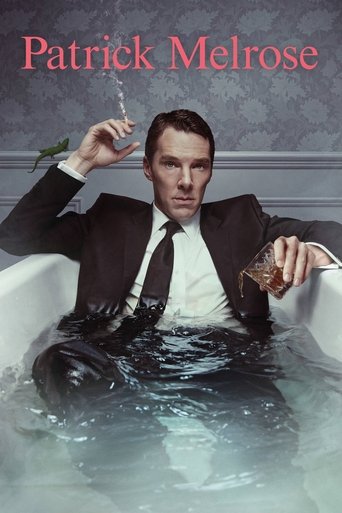
Five episodes, five novels, one very damaged Englishman. Benedict Cumberbatch plays Patrick Melrose, the semi-autobiographical creation of Edward St. Aubyn, adapted by David Nicholls and directed start to finish by Edward Berger (who'd later make "All Quiet on the Western Front" and "Conclave"). Episode one drops us into 1982 New York with Patrick already deep in a heroin habit, learning his monstrous father has died and flying over to collect the ashes. Later hours jump around the timeline — a childhood in the south of France, a country-house weekend, sobriety, dinner parties from hell. Hugo Weaving, Jennifer Jason Leigh, Blythe Danner, Jessica Raine and Anna Madeley fill out the wreckage around him.
What It Gets Right
Cumberbatch. This is the role he was built for and he knows it, doing the kind of full-body acting that most prestige TV never asks for. Episode two, the New York bender, is essentially a one-man play staged inside taxis and hotel bathrooms, and he keeps you locked in for an hour of a man losing an argument with his own veins. Nicholls (of "One Day") is the right adapter — he catches St. Aubyn's actual voice, that acid Wodehouse-poisoned-by-Céline cadence, and lets characters speak in whole cruel paragraphs. Berger shoots the flashbacks in oppressive sunlight and the present in queasy interiors, so you feel the two timelines pulling on each other. The supporting bench is stacked: Weaving as the father is quietly one of the most unsettling performances of the decade, and Jennifer Jason Leigh does more with a bored American drawl than most actors do with monologues.
Where It Falls Down
It is bleak. The subject matter — addiction, abuse, the specific ugliness of inherited wealth — is handled with wit but never softened, and if you need a character to root for, Patrick isn't quite that on first pass. The tonal jumps between episodes are severe by design; the second hour is a whirlwind, the third is a manners comedy at a country house, and viewers who wanted more of what worked in the previous episode sometimes get whiplash. The upper-class-Brits-behaving-appallingly register can feel airless if you don't have patience for it. And Cumberbatch is doing so much that the show occasionally becomes a monologue delivery system when it could breathe.
The Right Viewer
For you if you liked "Mad Men" as a study of a self-destructing man, "A Very English Scandal" for the arch British nastiness, or "I May Destroy You" for its refusal to look away. Fans of the novels will be startled by how well Nicholls preserved the prose. You'll bounce if you want your prestige drama to move — this is talky, interior, and often static by design — or if watching a wealthy Englishman abuse substances for an hour sounds like homework rather than a showcase.
The Bottom Line
WORTH IT is exactly right. It's not a life-changing series, it's a five-hour acting exhibition inside a genuinely well-adapted piece of literary fiction, and it knows precisely what it is. Berger keeps a tight hand on tone across wildly different chapters. Nicholls trusts the source and doesn't sand it down for a wider audience. The show has clear things to say about class, inheritance, and the cost of politeness that protects abusers, and it earns those themes through scenes and character rather than speeches — the drama does the arguing. Watch it for Cumberbatch, stay for how cleanly the whole thing is built.