
Where This Starts
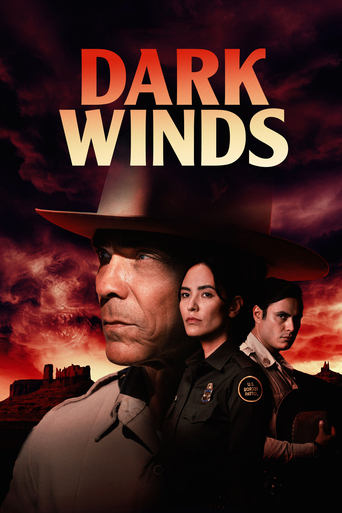
It's 1971 on the Navajo Nation. Lieutenant Joe Leaphorn (Zahn McClarnon) heads the tribal police out of a cramped Monument Valley station, working a helicopter heist and a double homicide that keep insisting they're the same case. His new deputy Jim Chee (Kiowa Gordon) rolls in from Los Angeles with a haircut and secrets. Sergeant Bernadette Manuelito (Jessica Matten) runs the border checkpoint and knows more about everyone than she says. Graham Roland adapted the Tony Hillerman novels; Robert Redford and George R.R. Martin are on the executive producer list. Six episodes a season, tight arcs, procedural bones.
The Case For
McClarnon. He's been a supporting-cast MVP for a decade (Longmire, Fargo, Reservation Dogs) and the show is essentially a long-overdue lead vehicle for him. He plays Leaphorn as a man metabolizing grief in real time, and he does it mostly with his eyes. The location shooting in New Mexico is the other star: red rock, dust, actual weather, none of that fake-desert soundstage look. Directors like Chris Eyre give scenes room to sit. The writers' room is heavily Native, and it shows in the small stuff, jokes cops make to each other, the rhythms of Diné bizaad drifting in and out of English. Season 3 leans harder into a Southwestern Gothic register and it's the show's strongest run.
What It Gets Wrong
The mysteries themselves are frequently the least interesting thing on screen. The season-one central case is fine, no more, and if you came for the puzzle-box satisfaction of a proper whodunit you'll be checking your phone. Pacing sags in the middle episodes. Some of the supporting antagonists are drawn thin, more archetype than person. Kiowa Gordon's Chee takes a season to click; early on he's playing a note the writing hasn't given him yet. And the budget shows in the action beats, which are competent but never thrilling.
Who'll Love It, Who'll Bail
If you liked Longmire, the slower stretches of True Detective season one, or the mood of Wind River, you're in. If you want a case-of-the-week you can solve along with the detective, or if you need a plot engine that revs hard every twenty minutes, you'll bounce by episode two. It's a hangout procedural with grief underneath. That's the whole pitch.
Final Word
WORTH IT because the craft carries the material past its weaker episodes. McClarnon is doing lead-actor work that most prestige dramas would kill for, the direction respects silence, and the show trusts its setting to do half the storytelling. It's a series about Navajo cops on Navajo land written and largely directed by Native filmmakers, and the reason that lands as texture instead of homework is that nobody stops the scene to explain it to you. Characters live in the world; the world isn't a lecture handed to the audience. Themes about jurisdiction, faith, and what the federal government did and didn't do in 1971 show up through the case, not through monologues. It's not a masterpiece. Season one is a warmup, season two tightens, season three delivers. Put it on.