
What It Is
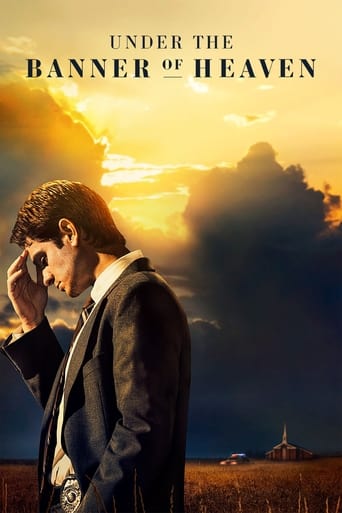
FX's 2022 limited series, seven episodes on Hulu, adapted by Dustin Lance Black from Jon Krakauer's nonfiction book. Andrew Garfield plays Jeb Pyre, a fictional Mormon detective in early-'80s suburban Utah pulled into the murder investigation of a young mother and her infant inside a devout LDS family, the Laffertys. Daisy Edgar-Jones plays Brenda Lafferty in flashbacks that build out who she was and what she walked into when she married in. Sam Worthington, Wyatt Russell, Chloe Pirrie, Denise Gough, Billy Howle, and Rory Culkin round out the family and its orbit; Gil Birmingham is Pyre's older, non-Mormon partner. Early episodes set up a procedural braided with the Laffertys' backstory and a broader thread on the church's founding-era history.
The Case For
Garfield is doing real work. Pyre's crisis is played mostly in the face, and Garfield is generous enough to let long silences carry it. Edgar-Jones is genuinely moving in a role that could have been a saint-with-a-halo; she makes Brenda specific and sharp. Wyatt Russell and Sam Worthington are cast against their usual registers and both find something ugly and true. Gil Birmingham steals scenes just by existing at the edge of the frame. The period detail is meticulous — the wood paneling, the church socials, the flat Utah sun — and director Isabel Sandoval handles the flashback material with restraint. When it lets its actors breathe, it's very good.
Where It Falls Down
It's long and it knows what it thinks. Seven episodes for a story that could have been five, with a pacing that mistakes stillness for weight. The frontier-era interludes about early Mormonism keep interrupting the actual investigation, and they read like a documentary someone dropped into the wrong show. Pyre's arc is telegraphed early and then re-telegraphed. Some of the dialogue in the family scenes is more thesis than talk, and a few of the Lafferty brothers are written as ideology in a beard rather than people.
The Right Viewer
If you liked Mare of Easttown, True Detective season one, or the slower FX prestige stuff, you'll settle in. If you're here from Krakauer's book expecting the history to hit as hard as it does on the page, you'll be frustrated by the dramatization. Anyone who wants a tight procedural bounces by episode two; anyone allergic to a show telling you what it's about will bounce by episode three.
The Bottom Line
BACKGROUND TV because the acting is better than the writing, and the writing keeps stepping on the acting. Black clearly has a personal stake — he was raised in the church — and the series' argument about how fundamentalism metastasizes is a real one. But the show doesn't trust the drama to deliver it. Characters pause to explain the theme. The historical cutaways underline what a good scene already said. That's the Lecture Test failing on craft, not politics: when a script won't let subtext be subtext, the tension leaks out. You'll watch Garfield do a small miracle in a scene, then watch the next scene tell you what the miracle meant. Fine to have on. Not appointment viewing.