
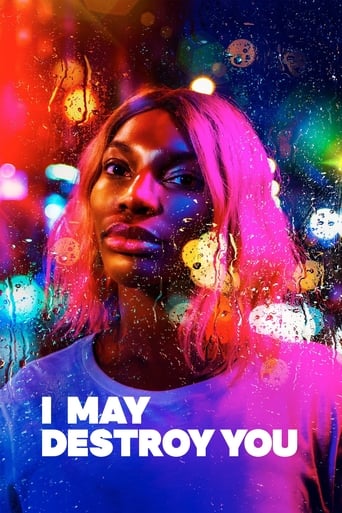
The Premise
Michaela Coel's 2020 HBO/BBC series follows Arabella, a Twitter-famous London writer trying to finish her second book while her life orbits around two best friends: Terry, an actress played by Weruche Opia, and Kwame, a fitness instructor played by Paapa Essiedu. The pilot sets up a night out during a writing deadline that she can't fully remember the morning after. That gap is the engine. Coel created it, wrote every episode, and co-directed. Twelve half-hours.
What It Gets Right
Coel is doing about four jobs at once and none of them slip. As a performer she's funny in a specific, unshowy way, then turns on a dime into something you don't want to look away from. As a writer she's willing to make Arabella genuinely difficult, self-serving, wrong, in ways prestige TV usually sands off its heroines. Paapa Essiedu is the quiet miracle of the show — Kwame's storyline is some of the best acting on television that year, and it doesn't announce itself. Weruche Opia gives Terry a jealousy and vanity that most best-friend roles never get near. Sam Miller's direction (he co-directs with Coel) keeps the visual language playful even when the subject matter isn't. The half-hour structure is used properly: episodes swerve in tone, timeline, and POV, and the show trusts you to keep up. It's shot in a London that feels lived in rather than location-scouted.
What It Gets Wrong
It's twelve episodes about consent, memory, and the internet, and if you're not in the headspace for that, the show will find you and know it. Some of the mid-season episodes take structural swings that will read as digressions if you wanted a straighter line. Coel writes long conversations that other showrunners would cut in half; that's the point, but it's a taste. The finale is divisive on purpose and people who need a clean bow will bounce off it. This isn't comfort viewing and it never pretends to be.
Who This Is Actually For
If you loved Fleabag for the writing and not the marketing, if Chewing Gum was on your radar, if you rate Steve McQueen's Small Axe or Adam Curtis-adjacent formal risk on TV, you're the audience. Viewers who want a linear thriller structure, or who found Fleabag "too much," will check out around episode three. Anyone browsing for background TV to fold laundry to should keep browsing. This one asks for your phone in the other room.
The Ruling
WORTH IT is the right call because the craft is genuinely rare and the show earns everything it's after through story, not sermon. Coel could've written a lecture. She wrote characters who behave badly, apologize badly, make jokes at the wrong moments, and stay recognizable. The themes land because the drama does the work — nobody delivers a thesis to camera, nobody's an avatar. Where it falls short of the very top tier is uneven pacing in the middle stretch and a couple of subplots that feel like Coel following her curiosity past what the season can absorb. Ambition slightly ahead of execution, which is the good version of that problem. Watch it awake.