In this piece · 9 sections+

Yes. Ted Lasso is worth watching, especially the first two seasons, which are as good as network-adjacent comedy has been in a decade.
The short case: a fish-out-of-water sitcom that mutates into a serious show about kindness, depression, and what men do with their feelings when they finally stop pretending they don't have any. Jason Sudeikis is doing career-best work. The supporting cast is deep enough that side characters carry entire episodes. Season 3 is a mixed bag and the discourse around it got ugly, but by then you'll already know if you're in. Start the pilot tonight. If you're not laughing by the end of episode two, this isn't your show and that's fine.
The quick verdict
Yes, watch it. Seasons 1 and 2 are elite — warm, sharp, weirdly moving, and much funnier than the marketing let on. It's for people who want a comedy with actual emotional stakes and don't mind that the plot is often about a mustached man trying to fix everyone around him. If you need cynicism and body count in your prestige TV, look elsewhere. If you want something that makes you like people more when you're done watching, this is that.
What Ted Lasso is actually about
An American college football coach with no soccer experience gets hired to manage a Premier League club in West London. The owner hired him to sabotage the team as revenge on her ex-husband. Ted, being Ted, doesn't notice, because he's too busy making biscuits and asking people about their childhoods. That's the setup for the whole first season and it works because Sudeikis plays Ted not as a rube but as someone who has decided, consciously, to be relentlessly kind in a country that thinks kindness is a con.
The tone shifts as it goes. Season one is closer to a traditional half-hour comedy, if a very sincere one. By season two the show is doing therapy arcs, panic attacks, father wounds, and the emotional aftermath of extremely bad decisions people made when they were sad. It's still funny. It's just also, occasionally, the saddest show on television. You'll cry at a Christmas episode. You'll be embarrassed about it. Then you'll watch it again.
The math on time
Four seasons, 44 episodes total, and here's where Apple gets weird about runtime. Season one episodes hover around 30 minutes. By season two and especially season three, they balloon — some season three episodes push 75 minutes, which is longer than most movies I've walked out of. Averaging it out, you're looking at roughly 22 to 24 hours of television across the run so far, with a fourth season on the way.
That's a long weekend, or a comfortable month of two-a-nights. Compared to something like Succession or Breaking Bad, it's a modest commitment. Compared to the average sitcom, it's a slog by season three. Worth it? For seasons one and two, absolutely. For season three, you'll want a checkpoint save halfway through in case you want to bail.
What it gets right
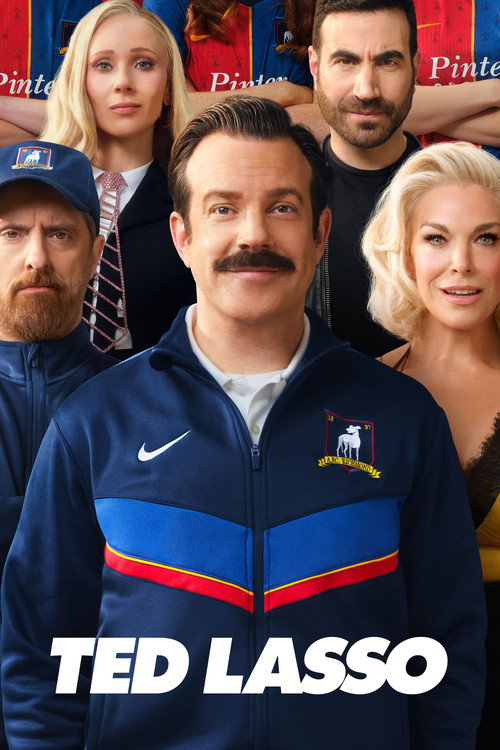
The writing knows exactly what to do with an ensemble. Roy Kent, played by Brett Goldstein like a bearded rock that swallowed a poet, is one of the great supporting characters of the streaming era. Keeley Jones (Juno Temple) turns what could've been a bimbo cliché into the most emotionally intelligent person on the show. Hannah Waddingham as Rebecca does more with a raised eyebrow than most leads do with a monologue. Nick Mohammed as Nate builds a heel turn across two seasons so patient and specific that when the pivot lands, it feels less like plot and more like watching a friend disappear. That's writing.
Sudeikis is the engine. His Ted is written to be a punchline early and a fully dimensioned person later, and Sudeikis plays every layer at once, so the reveals in season two hit as recognitions rather than twists. He's been telling you who Ted is the whole time. You just weren't listening. That's the performance of his life and he wrote most of it too.
And the show is genuinely, unfashionably funny. Not quipped-to-death Marvel funny. Actual jokes, built on character, delivered by people who understand comic rhythm. A running bit about Roy Kent hating Baz Luhrmann's Moulin Rouge is funnier than any twenty minutes of a Netflix stand-up special released this year. The Diamond Dogs meetings. The pun signs. The dart game. It earns the sentimentality because it earns the laughs first.
What doesn't work
Season three is a mess. Not a fatal one, but a real one, and the show pretends it isn't. Episodes run 15 to 25 minutes longer than they should. Storylines start and evaporate — Keeley's PR firm subplot, Zava the parody striker, a whole detour to Amsterdam that seems to exist because someone wanted to shoot in Amsterdam. The Nate arc, which had been the show's sharpest thread, resolves in a way that feels like the writers wanted to move on more than they wanted to earn it. Some episodes have three endings stapled together and none of them are the right one.
The show also can't decide, by season three, whether it's a workplace comedy, a sports drama, a romcom, or a therapy podcast. When it was all four at once in season two it worked because the tone was disciplined. In season three the tone drifts, and long episodes give scenes room to sit that should've been cut. You feel the writers' room disagreements on screen. It's still watchable. It's just not the show you fell for.
Occasional lecture problem too — the show sometimes lets characters explain the theme instead of dramatizing it. Ted himself is mostly immune because Sudeikis undercuts every big speech with a bit, but a few late-season monologues from supporting characters read like they were workshopped in a wellness seminar rather than a writers' room. When it happens, it's brief. When it doesn't happen, the show is the best version of itself.
The fourth season is now confirmed and shooting. Whether it fixes the third or just extends its problems is a question nobody can answer yet. Grade the show on seasons one and two. Treat three as bonus material with strong moments buried in bloat.
Who should watch it
If you liked Parks and Recreation, Schitt's Creek, or Friday Night Lights, yes, immediately. This sits in that same lane — earnest, ensemble-driven, more emotional than it looks from the poster.
If you bounced off Succession because you needed someone to root for, this is the antidote. If you gave up on The Bear because the anxiety was too much, Ted Lasso is the show your nervous system was asking for.
If you need your prestige TV to have a body count, a moral compromise per episode, or a lead who is complicated in the specific way antiheroes are complicated, skip it. Ted Lasso is complicated in a different way. Not less serious. Just less bleak.
If you hate sports shows, don't worry. The soccer is a backdrop. Fewer than a third of scenes take place on a pitch and the tactical stuff is deliberately vague. You will not need to learn what a 4-4-2 is. If you already know, you'll notice the show doesn't care and you'll have to make peace with that.
If you're allergic to sincerity, this show will make your teeth itch. There is no ironic distance. That's the whole point. Take the offer or don't.
Where to watch
Ted Lasso is an Apple TV+ exclusive. All four seasons will live there. Apple runs a free trial and the monthly subscription is one of the cheaper streaming services, so you can absolutely knock out seasons one and two inside a trial window if you're disciplined. It has never come to Netflix, Prime, Hulu, or HBO Max, and it never will — this is Apple's flagship comedy and they will die on that hill.
Not available to rent or buy on Amazon or iTunes as of now. Apple keeps its originals inside the walled garden.
FAQ
Is Ted Lasso overrated?
Depends which season we're talking about. Seasons one and two are correctly rated — the Emmy sweep in 2021 was earned. Season three is where the overrated conversation started, and honestly it's fair. Fans who loved the first two seasons were grading the third on a curve. If you come to the show fresh in 2026 and watch straight through, you'll feel the drop-off. That's not the show being overrated. That's one specific season being weaker than the ones around it.
Does it get better after season 1?
Season 2 is the peak. It deepens every character, adds a therapist arc that reframes the whole show, and delivers a Christmas episode that turned skeptics into evangelists. If you liked season 1, you'll love season 2. If season 1 felt too sweet, season 2 gets darker in ways that might win you back.
Is it too corny or too sad?
Both, on purpose, and it earns it. The corniness is the tone the show is negotiating with — Ted's optimism is presented as a choice, not a personality flaw, and other characters call him out on it constantly. The sadness sneaks up on you. If you're worried it's going to be a Hallmark movie about a nice man, it's not. The nice man has a panic disorder and a bad marriage and doesn't know how to be a father from another country.
How long is each episode?
Season 1 episodes are around 30 minutes. Season 2 stretches to 35–45. Season 3 got out of control — several episodes run 60–75 minutes, which was a huge complaint at the time. Nobody asked for hour-long sitcom episodes. Apple did it anyway. Bring snacks for season 3.
Watch the pilot tonight. If you're not smiling by the closing scene, bail — this show telegraphs its intentions early and either wins you over in 30 minutes or never will. If you're in, keep going through the end of season two before you decide anything else. That's the run that made the show a phenomenon, and it holds up.
✅ WORTH IT
Related guides
- Shows Like Ted Lasso: 10 Warm, Weird, Workplace Comedies Worth Your Time
- Shows Like Breaking Bad: 11 Picks That Actually Match the Vibe
- The Best Shows on Prime Video Right Now, Ranked by a Guy Who Hates Everything
- The Best Sci Fi Shows to Watch Right Now, Ranked by a Guy Who's Seen Too Much
- Shows Like The Walking Dead: 11 Picks Worth Your Time
Some links above are affiliate links (we're an Amazon Associate) — if you buy through them we may earn a commission. It never changes a verdict.